- The Impact Journal
- Posts
- Meet Priyanka: The Founder of Mental Macaw Clothing and a Student Changemaker Bridging Art, Sustainability, and Mental Health
Meet Priyanka: The Founder of Mental Macaw Clothing and a Student Changemaker Bridging Art, Sustainability, and Mental Health
Priyanka Adirnani is a university student from Dubai, now studying Chemistry at the University of North Carolina at Chapel Hill. While still in high school, she founded Mental Macaw Clothing, a youth-led initiative that combines sustainable fashion with conversations around mental health and self-expression.

Porte Global
January 08, 2026
Mental Macaw Clothing began not as a brand, but as a reflection of how Priyanka experienced the world. She noticed how strongly her emotions influenced the way she dressed , reaching for bright colors on happier days and darker tones during more introspective moments. That realization sparked a deeper understanding of fashion as a language: one that speaks even when words feel difficult.
Growing up in Dubai also shaped her perspective. Living in a city where fast fashion is deeply embedded, Priyanka became increasingly aware of how clothing is often bought, worn briefly, and discarded. Mental Macaw Clothing emerged at the intersection of these observations — using upcycled materials to encourage sustainability, while embedding messages that normalize conversations around mental wellbeing.
Today, Priyanka continues to expand her impact, bringing together creativity, intention, and community, all rooted in a belief that personal expression can be a powerful tool for social change.
Here’s how this project came to be, and what Priyanka learned along the way.
If you’re a current high school student interested in starting your own initiative and standing out in university applications — you can sign up for a 30-minute extracurricular review. During the call, we'll:
a) Learn about your university goals
b) Review your extracurricular profile
c) Help you shape a unique project idea.
#1: What inspired you to start Mental Macaw Clothing?
Priyanka: Mental Macaw Clothing started very organically, almost by accident. It came from a simple conversation I had with a friend about how I dress according to my mood. I realized that fashion had become my way of expressing emotions I didn’t always know how to verbalize.
That idea stayed with me: if clothes helped me process how I felt, maybe they could help others too. I began thinking about how personal clothing choices are, and how powerful they can be as tools for expression and connection.

Some of Priyanka’s early sketches
At the same time, growing up in Dubai made me very conscious of fast fashion. It’s incredibly accessible, but it also encourages overconsumption and waste. Seeing how easily clothes were bought and thrown away made me want to approach fashion more thoughtfully.
Mental Macaw Clothing became my way of weaving these threads together: self-expression, mental health awareness, and sustainability.
It felt like the most honest way to address multiple issues that mattered deeply to me at once.
#2: How did you turn this idea into something tangible?
Priyanka: The hardest part was figuring out where to start. Like many students, I had the idea, but translating it into action felt intimidating. So I began with what I had — clothes from my own closet that I no longer wore.
I experimented freely at first, painting and redesigning pieces just to see what felt right. I shared early versions with my family and friends, asking for honest feedback. Those conversations helped me understand what resonated and what didn’t.
I also leaned heavily on guidance from people around me — my aunt, who is a fashion designer, helped me think more intentionally about design, while my mom introduced me to embroidery techniques. Slowly, trial and error turned into something more structured.
Eventually, I narrowed my work down to a small collection using donated clothing, sketching designs on paper before bringing them to life.
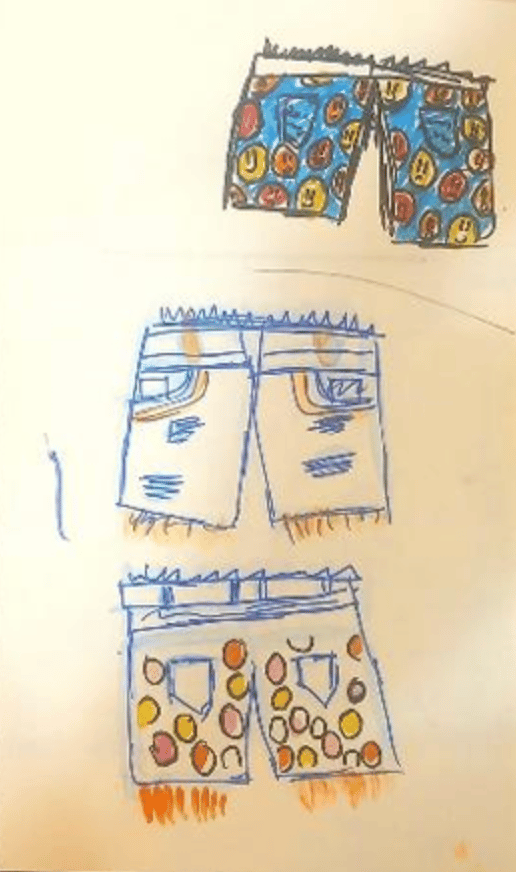
That process taught me that starting small and imperfect is still starting, and that momentum builds through experimentation.
#3: How does Mental Macaw Clothing create conversations around mental wellbeing?
Priyanka: Mental health was always meant to be at the heart of the project, not just in theory, but in how people experienced the clothing. For each piece, I wrote a short message explaining its story — where it came from, what inspired it, and the emotion behind it.
These narratives became conversation starters. People didn’t just ask where the clothes came from: they asked why. That curiosity opened the door to deeper discussions about mental wellbeing, identity, and self-care.
I also wanted this work to be collective, not individual. I collaborated with younger students in my community and taught them how to redesign their own clothes.
I asked them to think about issues they cared about — body image, confidence, self-acceptance — and express those ideas visually.
Seeing them take ownership of their designs was incredibly meaningful. It felt like Mental Macaw was no longer just my project, but something that could grow and evolve through others.
#4: What lessons did you learn from building a social-impact project as a student?
Priyanka: One of the biggest lessons I learned was the importance of feedback. Early on, I was very attached to certain designs and felt confident they were my best work.

But once I began sharing them more widely, I realized that intention doesn’t always translate clearly to others. Some feedback was difficult to hear at first, but stepping back allowed me to improve my designs significantly.
Listening to your audience, especially the people you want to reach, is essential. Their perspective helps you refine not just aesthetics, but impact.
That process taught me resilience and flexibility. Letting go of initial ideas often led to stronger, more thoughtful outcomes in the long run.
#5: What was the most challenging part of the journey?
Priyanka: The most challenging part was uncertainty. Designing the clothes took over a year, and throughout that time, I wasn’t sure if the project would truly resonate with others.
Putting something deeply personal into the public sphere is intimidating. You start to think about how people will judge your work, or whether they will care at all.
That fear of public opinion almost held me back at times. What helped was having a strong support system and reminding myself that meaningful work often feels uncomfortable at first.
Talking openly with people I trusted helped me move past that fear and continue building despite the uncertainty.
It was important for me to understand that my purpose for this project came from within and did not require the validation of those who may not understand it.
#6: What has been the most rewarding part for you personally?
Priyanka: Teaching other students how to redesign their clothes has been the most rewarding experience.

Watching them transform something ordinary into something uniquely theirs was incredible.
Seeing their confidence grow as they realized they could create, experiment, and express themselves through design reminded me why this work matters to me.
It wasn’t just about redesigning clothes, but about helping people see their own creativity and potential in a new way.
It showed me how small skills, when shared, can create real confidence and agency.
Being part of that process, where learning turns into self-expression, has been deeply fulfilling.
If you’re a current high school student interested in starting your own initiative and standing out in university applications — you can sign up for a 30-minute extracurricular review. During the call, we'll:
a) Learn about your university goals
b) Review your extracurricular profile
c) Help you shape a unique project idea.